About
你好!这里是一个代码与赛车并轨飞驰的世界。
我是Ziwen Hua,一名计算机专业的大一学生,同时也是一个血液里流淌着汽油与二进制代码的F1狂热分子。
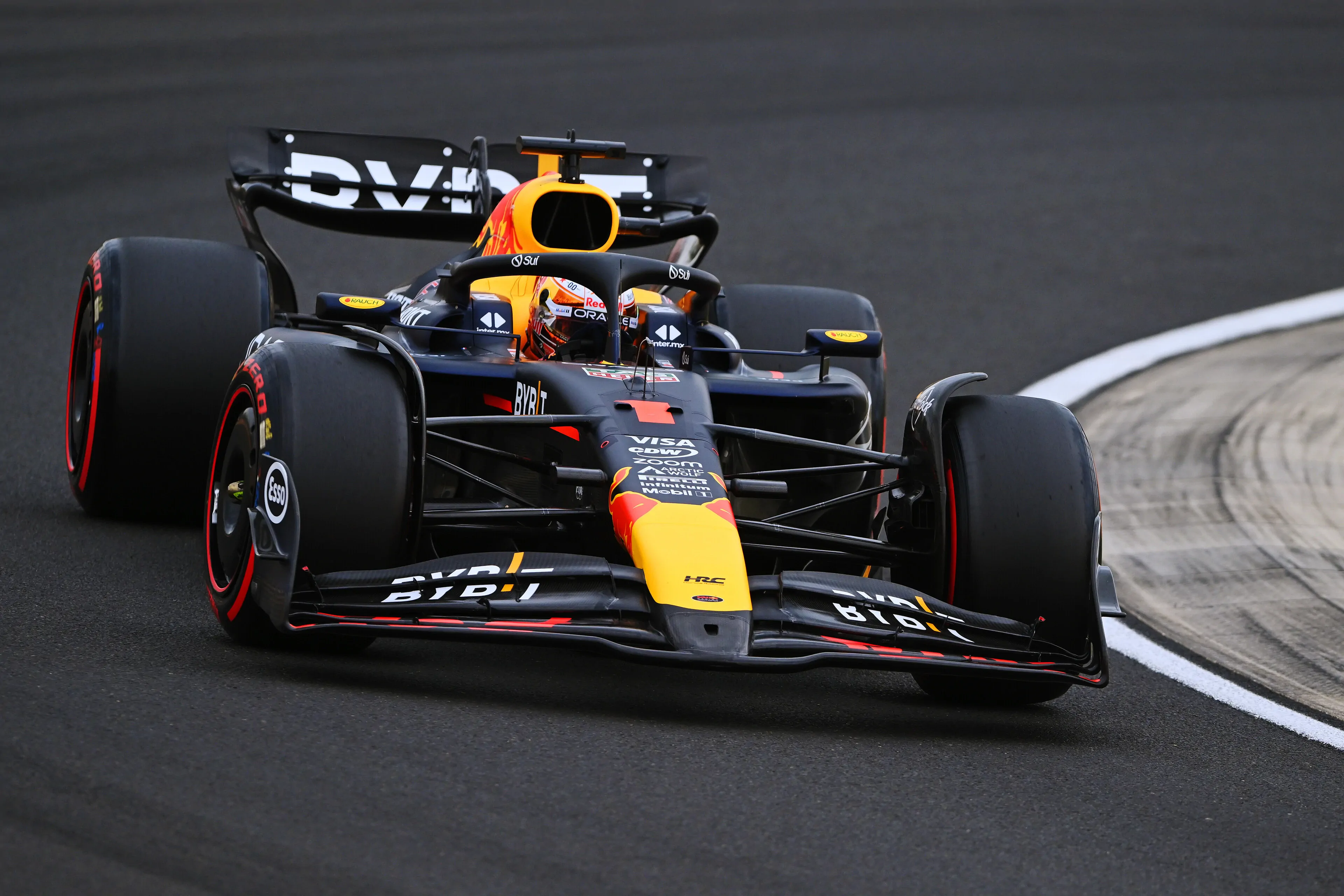
对我来说,计算机科学与F1赛车是同一枚硬币的两面:它们都是人类智慧在极限边界上的舞蹈。我痴迷于代码从逻辑到创造的魔法,也同样为赛道上毫秒间的策略博弈与空气动力学奇迹而心跳加速。
这个博客,就是我个人的 “数据记录仪” 和 “开发日志”。我会在这里:
-
「调试日志」:记录CS和大学学习生活中的“坑”与顿悟时刻,分享有价值的技术笔记。
-
「遥测分析」:解读F1赛场的技术风云、策略棋局与商业逻辑。
-
「架构前瞻」:探讨像AI、航天、消费电子等如何重塑我们生活的底层架构。
我不是专家,我是一个充满好奇的探索者。我相信,理解赛车如何过弯,能让我写出更高效的代码;理解芯片如何设计,也能让我更看懂车队的战略局限;理解星舰的设计思路,也能让我懂得如何挑战工程的极限。
我相信,编写优雅的代码与设计完美的赛车线路,追求的都是最优解;科技发布会与赛车进站,上演的都是精心编排的巅峰协作。我渴望探寻这些领域底层共通的逻辑与美感。
未来,希望这里能成为一个车库,一个实验室,也是我们这些好奇灵魂的维修区通道。
欢迎你,与我一同进入这个充满逻辑、速度与想象力的世界。系好安全带,我们的思维实验,现在发车。
 我最喜欢的公式:麦克斯韦方程组
我最喜欢的算法:蒙特卡洛模拟
# 通用蒙特卡洛框架类
import random
import numpy as np
from typing import Callable, List, Tuple
import time
import statistics

class MonteCarloSimulator:
    """
    通用的蒙特卡洛模拟器类
    """

    def __init__(self, seed=None):
        """初始化模拟器"""
        if seed is not None:
            random.seed(seed)
            np.random.seed(seed)

    def estimate_value(self,
                      sampler: Callable,
                      evaluator: Callable,
                      num_samples: int = 10000,
                      verbose: bool = False) -> Tuple[float, dict]:
        """
        通用的蒙特卡洛估值

        参数:
        sampler: 采样函数,每次调用返回一个样本
        evaluator: 评估函数,输入样本返回估值
        num_samples: 采样数量
        verbose: 是否显示详细过程

        返回:
        (估计值, 统计信息字典)
        """
        values = []
        start_time = time.time()

        for i in range(num_samples):
            sample = sampler()
            value = evaluator(sample)
            values.append(value)

            if verbose and i % (num_samples // 10) == 0 and i > 0:
                progress = i / num_samples * 100
                print(f"进度: {progress:.1f}%")

        estimate = sum(values) / num_samples

        # 计算统计信息
        stats = {
            'mean': estimate,
            'std': statistics.stdev(values) if len(values) > 1 else 0,
            'min': min(values),
            'max': max(values),
            'samples': num_samples,
            'time': time.time() - start_time,
            'values': values if len(values) <= 1000 else values[:1000]  # 保存部分值用于分析
        }

        # 计算标准误差和置信区间
        if len(values) > 1:
            std_error = stats['std'] / np.sqrt(num_samples)
            stats['std_error'] = std_error
            stats['confidence_95'] = (estimate - 1.96 * std_error,
                                      estimate + 1.96 * std_error)
            stats['confidence_99'] = (estimate - 2.576 * std_error,
                                      estimate + 2.576 * std_error)

        return estimate, stats

    def convergence_analysis(self,
                           sampler: Callable,
                           evaluator: Callable,
                           max_samples: int = 100000,
                           checkpoints: List[int] = None) -> dict:
        """
        收敛性分析:观察估计值如何随样本数增加而收敛

        返回包含不同样本数下结果的字典
        """
        if checkpoints is None:
            checkpoints = [100, 500, 1000, 5000, 10000, 50000, 100000]
            checkpoints = [c for c in checkpoints if c <= max_samples]

        results = {}

        print("进行收敛性分析...")
        for n in checkpoints:
            estimate, stats = self.estimate_value(sampler, evaluator, n)
            results[n] = {
                'estimate': estimate,
                'std_error': stats.get('std_error', 0)
            }
            print(f"  样本数 {n:7d}: 估计值 = {estimate:.6f} (±{stats.get('std_error', 0):.6f})")

        return results

# 使用示例
if __name__ == "__main__":
    print("=== 通用蒙特卡洛框架使用示例 ===")

    simulator = MonteCarloSimulator(seed=42)

    # 示例1:估算π值
    print("\n1. 估算π值:")

    def pi_sampler():
        return (random.random(), random.random())

    def pi_evaluator(point):
        x, y = point
        return 1 if x**2 + y**2 <= 1 else 0

    pi_estimate, pi_stats = simulator.estimate_value(pi_sampler, pi_evaluator, 100000)
    print(f"   估算结果: {4 * pi_estimate:.6f} (真实值: {np.pi:.6f})")
    print(f"   标准误差: {4 * pi_stats['std_error']:.6f}")
    print(f"   95%置信区间: ({4 * pi_stats['confidence_95'][0]:.6f}, "
          f"{4 * pi_stats['confidence_95'][1]:.6f})")

    # 示例2:估算复杂函数的积分
    print("\n2. 估算复杂积分 ∫(0到1) sin(x^2) dx:")

    def complex_sampler():
        return random.random()

    def complex_evaluator(x):
        return np.sin(x**2)

    integral_estimate, integral_stats = simulator.estimate_value(
        complex_sampler, complex_evaluator, 50000
    )
    print(f"   估算结果: {integral_estimate:.6f}")
    print(f"   标准误差: {integral_stats['std_error']:.6f}")

    # 收敛性分析
    print("\n3. 收敛性分析示例:")
    convergence_results = simulator.convergence_analysis(
        pi_sampler, pi_evaluator, max_samples=50000
    )
Hello! Welcome to a world where code and racing converge at full speed.
I’m Ziwen Hua (or King Hua), a first-year computer science student and an F1 enthusiast whose veins run with gasoline and binary code.
To me, computer science and Formula 1 are two sides of the same coin—both are a dance of human intellect at the edge of possibility. I’m captivated by the magic that turns logic into creation through code, just as I’m thrilled by the split-second strategy and aerodynamic wonders on the racetrack.
This blog is my personal data recorder and development log. Here, I’ll share:
- Debugging Notes: Recording pitfalls and “aha!” moments in my CS journey and my college life, along with useful technical insights.
- Telemetry Analysis: Breaking down the tech, strategy, and business logic behind the scenes in F1.
- Architecture Outlook: Exploring how fields like AI, aerospace, and consumer electronics are reshaping the foundations of our world.
I’m not an expert—I’m a curious explorer. I believe understanding how a racing car takes a corner can help me write more efficient code; understanding how a chip is designed can deepen my view of a team’s strategic limits; and understanding the engineering behind Starship can inspire me to push boundaries.
To me, writing elegant code and designing the perfect racing line both seek the optimal solution; a tech keynote and a pit stop are both performances of meticulously orchestrated collaboration. I’m drawn to the underlying logic and beauty common across these fields.
I hope this space becomes a garage, a lab, and a pit lane for curious minds like ours.
Welcome. Strap in—our thought experiment is about to begin.
My favourite formula: Maxwell’s equations
My favourite algorithm: Monte Carlo Simulation
# General Monte Carlo Framework Class
import random
import numpy as np
from typing import Callable, List, Tuple
import time
import statistics

class MonteCarloSimulator:
    """
    General Monte Carlo simulator class
    """

    def __init__(self, seed=None):
        """Initialize simulator"""
        if seed is not None:
            random.seed(seed)
            np.random.seed(seed)

    def estimate_value(self,
                      sampler: Callable,
                      evaluator: Callable,
                      num_samples: int = 10000,
                      verbose: bool = False) -> Tuple[float, dict]:
        """
        General Monte Carlo value estimation

        Parameters:
        sampler: Sampling function, returns one sample per call
        evaluator: Evaluation function, returns value for given sample
        num_samples: Number of samples
        verbose: Whether to show detailed process

        Returns:
        (Estimated value, Statistics dictionary)
        """
        values = []
        start_time = time.time()

        for i in range(num_samples):
            sample = sampler()
            value = evaluator(sample)
            values.append(value)

            if verbose and i % (num_samples // 10) == 0 and i > 0:
                progress = i / num_samples * 100
                print(f"Progress: {progress:.1f}%")

        estimate = sum(values) / num_samples

        # Calculate statistics
        stats = {
            'mean': estimate,
            'std': statistics.stdev(values) if len(values) > 1 else 0,
            'min': min(values),
            'max': max(values),
            'samples': num_samples,
            'time': time.time() - start_time,
            'values': values if len(values) <= 1000 else values[:1000]  # Save partial values for analysis
        }

        # Calculate standard error and confidence intervals
        if len(values) > 1:
            std_error = stats['std'] / np.sqrt(num_samples)
            stats['std_error'] = std_error
            stats['confidence_95'] = (estimate - 1.96 * std_error,
                                      estimate + 1.96 * std_error)
            stats['confidence_99'] = (estimate - 2.576 * std_error,
                                      estimate + 2.576 * std_error)

        return estimate, stats

    def convergence_analysis(self,
                           sampler: Callable,
                           evaluator: Callable,
                           max_samples: int = 100000,
                           checkpoints: List[int] = None) -> dict:
        """
        Convergence analysis: Observe how estimate converges with increasing samples

        Returns dictionary with results at different sample sizes
        """
        if checkpoints is None:
            checkpoints = [100, 500, 1000, 5000, 10000, 50000, 100000]
            checkpoints = [c for c in checkpoints if c <= max_samples]

        results = {}

        print("Performing convergence analysis...")
        for n in checkpoints:
            estimate, stats = self.estimate_value(sampler, evaluator, n)
            results[n] = {
                'estimate': estimate,
                'std_error': stats.get('std_error', 0)
            }
            print(f"  Samples {n:7d}: Estimate = {estimate:.6f} (±{stats.get('std_error', 0):.6f})")

        return results

# Usage example
if __name__ == "__main__":
    print("=== General Monte Carlo Framework Example ===")

    simulator = MonteCarloSimulator(seed=42)

    # Example 1: Estimate π
    print("\n1. Estimating π:")

    def pi_sampler():
        return (random.random(), random.random())

    def pi_evaluator(point):
        x, y = point
        return 1 if x**2 + y**2 <= 1 else 0

    pi_estimate, pi_stats = simulator.estimate_value(pi_sampler, pi_evaluator, 100000)
    print(f"   Estimate: {4 * pi_estimate:.6f} (Actual: {np.pi:.6f})")
    print(f"   Standard Error: {4 * pi_stats['std_error']:.6f}")
    print(f"   95% Confidence Interval: ({4 * pi_stats['confidence_95'][0]:.6f}, "
          f"{4 * pi_stats['confidence_95'][1]:.6f})")

    # Example 2: Estimate complex function integral
    print("\n2. Estimating complex integral ∫(0 to 1) sin(x²) dx:")

    def complex_sampler():
        return random.random()

    def complex_evaluator(x):
        return np.sin(x**2)

    integral_estimate, integral_stats = simulator.estimate_value(
        complex_sampler, complex_evaluator, 50000
    )
    print(f"   Estimate: {integral_estimate:.6f}")
    print(f"   Standard Error: {integral_stats['std_error']:.6f}")

    # Convergence analysis
    print("\n3. Convergence Analysis Example:")
    convergence_results = simulator.convergence_analysis(
        pi_sampler, pi_evaluator, max_samples=50000
    )